


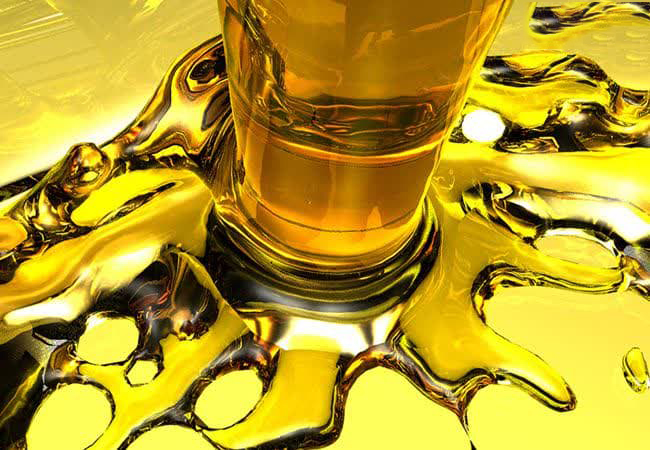
Types of Paraffin:
- Liquid Paraffin
- Solid Paraffin
Difference between Solid and Liquid Paraffin:
Solid paraffin, as the name suggests, is a solid or gel-like substance that burns slowly when ignited. In contrast, liquid paraffin is used as a fluid substance. Solid paraffin is available in various molds and colors in the market, whereas liquid paraffin is usually sold in bulk in containers of different capacities and comes in yellow (industrial) or white (hygienic) variants.
Difference between Industrial and Hygienic Liquid Paraffin:
Industrial liquid paraffin is mainly used as a lubricant, while hygienic liquid paraffin is colorless, odorless, and completely pure, suited for hygienic applications. Hygienic liquid paraffin is refined and free from the impurities found in industrial paraffin, making it suitable for laboratory, hygienic, and cosmetic uses.
Uses of Liquid Paraffin:
Industrial liquid paraffin has numerous applications, including paper production, food quality improvement, rubber manufacturing, soap production, candle making, medical industries, textile production, and many others. This multifunctional substance plays a key role in enhancing product quality and supporting equipment efficiency.
Due to its disinfectant and antimicrobial properties, industrial liquid paraffin is highly valued in the production of hygienic and cosmetic products. Items benefiting from these properties include creams, lotions, shampoos, and disinfectants.
Additionally, industrial liquid paraffin is widely used in the electronics and electrical industries due to its excellent insulating properties and resistance to thermochemical conditions. It serves as a robust electrical and thermal insulator in transformers, cables, switches, and electrical components.
In summary, industrial liquid paraffin, with its unique properties, is a versatile and essential substance across various industries. This valuable substance not only preserves and enhances product quality but also plays a crucial role in producing hygienic and cosmetic items. Industrial liquid paraffin is a hydrocarbon-based chemical compound with diverse applications in multiple sectors.
Other Applications Include:
-
Rubber manufacturing
-
Cable production
-
Textile industry and fabric manufacturing
-
Foundry industries
-
Wood and paper industries (e.g., stationery production)
-
Used in the production and storage of reactive gases like sulfur dioxide and chlorine dioxide
-
Utilized in foundries in pure form
-
Used in paint, resin, and industrial glue manufacturing, as well as in textile production
-
Used in the production of cosmetic and hygienic products in hygienic-grade paraffin
-
In medicine, it is used for producing laxatives and ointments with food-grade paraffin
-
Applied as a softening agent in skin diseases and as a lubricant for treating dry eyes. Liquid paraffin injection into the pleural cavity (oleothorax) was a widespread treatment for pulmonary tuberculosis before effective anti-tuberculosis drugs were available. In medicine, paraffin baths (a mixture of paraffin and mineral oil) are also used as an effective and simple method for applying surface heat, especially to small joints like interphalangeal joints. This is commonly used for conditions such as rheumatoid arthritis and osteoarthritis. The mixture of paraffin and mineral oil has a low specific heat, allowing patients to tolerate the heat of paraffin (compared to water at the same temperature).
-
Used in laboratories as a paraffin bath for temperature control
-
Used in infrared devices
-
In pharmaceuticals, it is also used to facilitate X-ray imaging of internal organs
Industrial-grade liquid paraffin is also used in match manufacturing, battery manufacturing, and cable production. Additionally, hygienic-grade liquid paraffin is used in the production of cosmetics and hygienic products. In the wood and paper industries (e.g., waterproof paper production), industrial-grade liquid paraffin is used. It is also employed as a grease solvent, in insecticides, and in the production of pesticides.
What is Paraffin Wax?
Solid paraffin with high quality and low oil content, white color, odorless, and tasteless, is called paraffin wax.
Types of Liquid Paraffin:
Liquid paraffin comes in various grades, each of which undergoes a different refining process. Regardless of grade, liquid paraffin is produced with varying flash points.
- Industrial-grade liquid paraffin
- Hygienic-grade liquid paraffin
- Food-grade liquid paraffin
Choosing the Right Type of Paraffin:
Several factors are essential when purchasing paraffin, but first, it is necessary to consider the intended applications. The quality of paraffin depends on its industrial application. For example, in candle-making, low oil content is necessary for high-quality candles, whereas, for lubrication, the opposite is true.
In general, whiter paraffin is of higher quality than off-white or pale paraffin.
A simple test can verify the quality of paraffin: breaking it reveals crystalline grains inside, which indicate good quality. The whiter, larger, and more sugar-like these crystals are, the higher the quality of the paraffin.
Food-Grade Paraffin:
Food-grade paraffin is free from aromatic compounds. Generally, valuable paraffin has a low level of aromatic compounds, and it’s worth noting that the price of paraffin increases as its aromatic content decreases.
